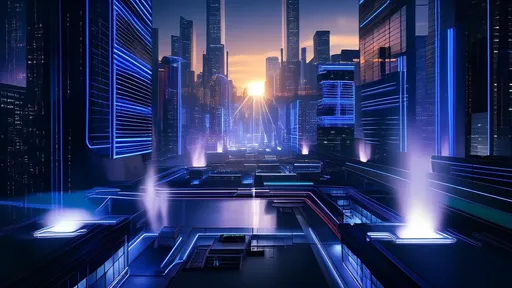
The concept of vertical light distribution in cyber cities represents a fascinating intersection of urban planning, technology, and environmental design. As metropolitan areas continue to grow vertically, the need for efficient and aesthetically pleasing lighting solutions becomes increasingly critical. Traditional horizontal lighting models are no longer sufficient to address the unique challenges posed by towering skyscrapers and multi-layered urban infrastructures.
Cyber cities, with their dense clusters of high-rise buildings and complex networks of transportation systems, require a fundamentally different approach to illumination. The vertical dimension introduces variables such as shadow casting between structures, light pollution at different altitudes, and the psychological impact of artificial lighting on residents living above ground level. Architects and urban planners are now collaborating with lighting engineers to develop sophisticated distribution schemes that account for these three-dimensional considerations.
One of the most innovative aspects of contemporary vertical lighting solutions involves dynamic systems that respond to real-time conditions. These smart networks can adjust intensity and color temperature based on factors like time of day, weather conditions, and even pedestrian density. In Singapore's Marina Bay district, for instance, buildings communicate with each other through IoT-enabled lighting controls to create harmonious illumination patterns across the vertical cityscape while minimizing energy consumption.
The biological implications of vertical light distribution cannot be overstated. Research has shown that improper lighting in high-rise environments can disrupt circadian rhythms, particularly for residents in upper floors who receive significantly different light exposure than those at street level. New distribution models incorporate spectral tuning capabilities that mimic natural daylight progression, helping to maintain biological harmony despite the artificial nature of the urban environment.
From an aesthetic perspective, vertical lighting transforms city skylines into dynamic canvases. The strategic placement of illumination sources creates depth perception at night, allowing buildings to appear as layered elements rather than flat silhouettes. This technique, known as "volumetric lighting," has become a signature feature of cyber cities like Shanghai and Dubai, where architects use light to emphasize the three-dimensional qualities of their structures.
Energy efficiency remains a central concern in vertical light distribution schemes. Traditional street-level lighting approaches prove inadequate when applied to vertical surfaces, often resulting in significant light spill and wasted energy. Contemporary solutions employ precision optics, directional LEDs, and computerized control systems to ensure that light reaches only intended surfaces. The Tokyo Skytree's lighting system, for example, uses specially designed reflectors that project 90% of emitted light onto the tower's surface with minimal atmospheric dispersion.
The technical challenges of implementing vertical lighting systems are considerable. Engineers must account for factors like wind-induced sway in tall structures, maintenance accessibility at extreme heights, and the cumulative heat generation from thousands of lighting fixtures. Recent advancements in materials science have led to the development of ultra-lightweight, flexible LED panels that can withstand structural movement while maintaining consistent illumination patterns.
Public safety represents another critical dimension of vertical light distribution. Well-designed systems provide adequate illumination for emergency situations while avoiding glare that could disorient residents or pilots. In New York's One World Trade Center, the lighting scheme incorporates redundant power systems and failsafe mechanisms to ensure continuous operation during power outages or emergencies.
Looking toward the future, vertical light distribution will likely incorporate more biophilic design elements, bringing natural lighting patterns into the urban vertical environment. Experiments with light-guiding concrete and photon-recycling materials suggest that future cyber cities might develop entirely new paradigms for managing light across their three-dimensional landscapes. These innovations promise to make vertical urban spaces more livable, sustainable, and visually compelling as our cities continue their upward trajectory.
The integration of vertical farming systems with lighting distribution networks presents another fascinating development. As agricultural operations move into urban high-rises, their specialized lighting needs must be coordinated with the city's overall illumination strategy. This convergence of functions exemplifies how cyber cities are evolving into complex, multi-purpose ecosystems where lighting serves far more than just visual purposes.
Cultural considerations also play a significant role in shaping vertical light distribution schemes. Different cities develop unique lighting identities based on their architectural heritage and civic values. Paris maintains relatively subdued vertical illumination to preserve its historic skyline, while cities like Hong Kong embrace vibrant, ever-changing light displays as part of their modern identity. These cultural choices influence everything from light intensity to color palette selection in vertical distribution plans.
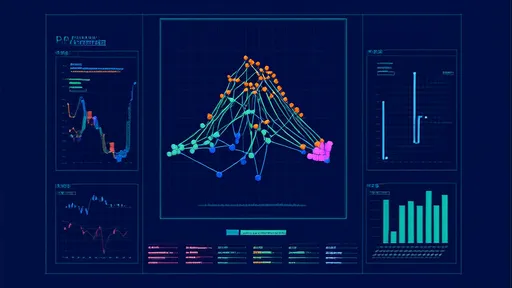
As measurement technologies advance, urban planners gain increasingly sophisticated tools for assessing vertical light distribution effectiveness. Lidar scanning, drone-based photometry, and AI-powered analysis platforms now allow for precise evaluation of illumination uniformity, glare control, and energy efficiency across entire vertical cityscapes. This data-driven approach enables continuous refinement of lighting strategies to meet evolving urban needs.
The psychological impact of vertical lighting deserves particular attention in cyber city design. Studies indicate that residents experience different emotional responses to lighting at various elevations, with improper lighting at height potentially exacerbating feelings of isolation or detachment. Thoughtful vertical distribution schemes incorporate human-centric design principles to create comforting, engaging light environments throughout all levels of the urban fabric.
Regulatory frameworks struggle to keep pace with the rapid evolution of vertical lighting technologies. Existing light pollution ordinances often fail to address the unique challenges of vertical illumination, leading to conflicts between developers, residents, and municipal authorities. Forward-thinking cities are beginning to develop specialized zoning codes that specifically govern vertical light distribution while allowing for technological innovation.
In conclusion, the development of effective vertical light distribution systems represents one of the most complex and rewarding challenges in contemporary urban design. As cyber cities continue to redefine our understanding of urban space, the solutions we develop for illuminating these vertical landscapes will play a crucial role in determining their functionality, sustainability, and overall quality of life. The intersection of technology, design, and human factors in this field promises to yield exciting innovations in the coming decades.

By /Aug 15, 2025

By /Aug 15, 2025

By /Aug 15, 2025

By /Aug 15, 2025
By /Aug 15, 2025

By /Aug 15, 2025

By /Aug 15, 2025

By /Aug 15, 2025

By /Aug 15, 2025

By /Aug 15, 2025

By /Aug 15, 2025

By /Aug 15, 2025
By /Aug 15, 2025

By /Aug 15, 2025

By /Aug 15, 2025
By /Aug 15, 2025

By /Aug 15, 2025
By /Aug 15, 2025

By /Aug 15, 2025

By /Aug 15, 2025