The field of facial expression analysis has undergone significant advancements in recent years, particularly with the integration of microexpression detection technologies. As researchers and developers increasingly rely on facial capture data to decode subtle emotional cues, the need for standardized data cleaning protocols has become paramount. Without proper guidelines, raw microexpression datasets risk containing inconsistencies that could compromise the validity of entire studies or commercial applications.
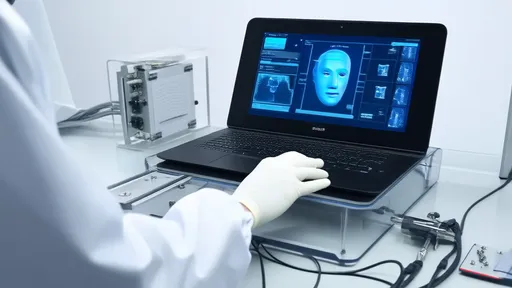
Understanding the complexity of microexpressions is the first step toward appreciating why data cleaning matters. These fleeting facial movements often last less than half a second and involve minute muscle contractions that are easily obscured by lighting conditions, head movements, or even the subject's physiological characteristics. Unlike macroexpressions that form the basis of conventional emotion recognition systems, microexpressions require specialized capture equipment capable of recording at exceptionally high frame rates - typically 200-300 frames per second. This technological requirement alone creates unique challenges in data preprocessing that don't exist in standard facial analysis pipelines.
The data cleaning process begins at the acquisition stage, where environmental factors must be carefully controlled. Uneven lighting can create artificial shadows that mimic facial action units, while camera sensor noise might be misinterpreted as micro-movements. Professional-grade setups often employ multiple infrared light sources positioned at specific angles to minimize these effects, but even under ideal conditions, raw data requires extensive validation. Researchers have documented cases where a single aberrant pixel in a 4K capture could generate false positive microexpression readings after algorithmic processing.
Temporal alignment represents another critical challenge in microexpression data cleaning. Because these expressions occur so rapidly, even minor synchronization issues between capture devices can distort temporal patterns. The leading laboratories working in this space have developed proprietary timestamp verification systems that cross-reference multiple data streams, including EMG readings when available. This becomes particularly important when combining optical facial capture with other biometric sensors, as millisecond-level discrepancies can render multimodal datasets unusable for precise emotion analysis.
Perhaps the most controversial aspect of microexpression data cleaning involves the handling of cultural and demographic variables. Recent meta-analyses have shown that baseline facial muscle tension varies significantly across ethnic groups, age brackets, and even professional backgrounds. A sales executive's neutral face might show muscle activation patterns that would be flagged as microexpressions in a dataset primarily composed of university students. Sophisticated cleaning protocols now incorporate demographic normalization subroutines, though the ethical implications of such approaches continue to spark debate within the scientific community.
The emergence of machine learning techniques has simultaneously simplified and complicated the data cleaning process. While neural networks can automatically detect and remove many types of artifacts, they also introduce new categories of potential contamination. Adversarial examples - intentionally manipulated inputs designed to fool AI systems - have been demonstrated in microexpression datasets, sometimes taking the form of nearly imperceptible pixel patterns that cause classifiers to detect emotions that weren't present in the original recording. This has led to the development of specialized data sanitation layers in modern processing pipelines that screen for both traditional noise and these emerging threat vectors.
Looking toward the future, the field appears to be moving toward more decentralized and real-time data cleaning solutions. Edge computing devices with dedicated preprocessing chips can now perform initial data validation at the capture point, dramatically reducing the storage and bandwidth requirements for microexpression research. Some experimental systems even incorporate continuous cleaning during live analysis sessions, though this approach remains controversial due to concerns about transparency and reproducibility. As the technology matures, we may see the development of universal microexpression data cleaning standards similar to those that exist for other types of biometric information.
What remains clear is that microexpression analysis cannot advance without parallel progress in data cleaning methodologies. The subtlety that makes these facial cues so valuable for psychological assessment and lie detection also makes them extraordinarily vulnerable to contamination at every stage of the data lifecycle. Researchers and practitioners must remain vigilant about the integrity of their datasets, recognizing that even the most sophisticated analysis algorithms cannot compensate for fundamentally flawed input data. The next generation of emotion recognition systems will likely be judged as much by their data hygiene practices as by their algorithmic innovations.
By /Aug 15, 2025

By /Aug 15, 2025

By /Aug 15, 2025

By /Aug 15, 2025

By /Aug 15, 2025

By /Aug 15, 2025

By /Aug 15, 2025

By /Aug 15, 2025
By /Aug 15, 2025

By /Aug 15, 2025

By /Aug 15, 2025

By /Aug 15, 2025

By /Aug 15, 2025

By /Aug 15, 2025

By /Aug 15, 2025

By /Aug 15, 2025
By /Aug 15, 2025
By /Aug 15, 2025

By /Aug 15, 2025

By /Aug 15, 2025