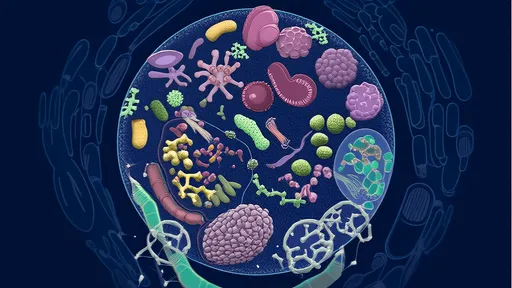
The human gut microbiome, a complex ecosystem of trillions of microorganisms, has long been recognized for its role in digestion, immunity, and overall health. Recent breakthroughs in microbiome research, however, are revealing an even more profound connection—this invisible universe within us may hold the key to early cancer detection. Scientists are now exploring how shifts in fecal microbial composition could serve as a biological radar, signaling the presence of malignancies long before traditional diagnostics catch them.
The Silent Sentinels: Gut Bacteria as Cancer Detectives
Imagine a scenario where a simple stool sample could reveal early signs of pancreatic, colorectal, or even breast cancer. This isn't science fiction—it's the cutting edge of oncobiome research. Studies have identified distinct microbial signatures associated with various cancers. For instance, elevated levels of Fusobacterium nucleatum in fecal matter have been consistently linked to colorectal cancer progression, while depletion of butyrate-producing bacteria appears in pancreatic cancer patients' microbiomes years before diagnosis.
The mechanism behind this microbial foresight is fascinating. Gut bacteria interact with our cells through metabolites—small molecules that can influence inflammation, DNA repair, and even tumor suppression. When this delicate communication breaks down, microbial populations shift in predictable ways. Researchers at the European Molecular Biology Laboratory recently demonstrated that these changes occur during cancer's "silent phase," sometimes a decade before clinical symptoms emerge.
From Correlation to Causation: The Diagnostic Revolution
While early studies established correlations between microbiome changes and cancer, newer research is uncovering causal relationships. A landmark 2023 study published in Nature Medicine tracked over 10,000 individuals for seven years. Using machine learning to analyze fecal samples, researchers could predict liver cancer development with 86% accuracy—18 months before standard imaging detected tumors. The predictive power came from monitoring twenty-three bacterial species and their metabolic byproducts.
What makes microbial diagnostics particularly promising is their non-invasive nature and potential cost-effectiveness. Unlike blood biopsies or imaging scans, stool sample analysis requires no specialized equipment beyond standard sequencing technology. This accessibility could democratize early cancer screening, especially in resource-limited settings where advanced medical infrastructure is scarce.
Challenges on the Road to Clinical Implementation
Despite the excitement, significant hurdles remain before microbiome-based cancer screening enters mainstream medicine. Individual variations in gut flora composition are substantial—affected by diet, antibiotics, geography, and even household pets. Researchers are working to distinguish true cancer signals from this background "noise" through large-scale population studies and advanced computational models.
Another challenge lies in standardization. Current microbiome analysis techniques vary widely between laboratories, making results difficult to compare. The International Human Microbiome Standards Consortium is now developing unified protocols, but achieving clinical-grade reproducibility will take time. Ethical questions also emerge—how should healthcare providers handle incidental findings of cancer risk in otherwise healthy individuals?
The Future Landscape of Cancer Prevention
Looking ahead, scientists envision a multi-modal approach combining microbial analysis with existing screening methods. Imagine annual check-ups that include a "microbiome health index" alongside cholesterol tests. Some startups are already developing at-home gut microbiome test kits with cancer risk algorithms, though experts caution that these consumer products currently lack clinical validation.
Perhaps most intriguing is the therapeutic potential. If specific bacteria can warn of cancer, might modifying the microbiome help prevent it? Several clinical trials are exploring probiotic interventions and fecal microbiota transplants for high-risk patients. While still experimental, this bifunctional approach—using microbes as both sentinels and soldiers—could revolutionize oncology.
The gut microbiome's role in cancer detection represents a paradigm shift in medicine. As research progresses, we may find ourselves in an era where our bacterial companions provide some of medicine's most powerful diagnostic tools—all from a sample of what we once thought was merely waste.
By /Jul 18, 2025

By /Jul 18, 2025
By /Jul 18, 2025
By /Jul 18, 2025

By /Jul 18, 2025

By /Jul 18, 2025

By /Jul 18, 2025

By /Jul 18, 2025

By /Jul 18, 2025
By /Jul 18, 2025
By /Jul 18, 2025
By /Jul 18, 2025

By /Jul 18, 2025

By /Jul 18, 2025
By /Jul 18, 2025
By /Jul 18, 2025

By /Jul 18, 2025
By /Jul 18, 2025
By /Jul 18, 2025
By /Jul 18, 2025