Mitochondrial Transplant Therapy: Nanosurgery to Repair the Cellular Powerhouse

Jul 18, 2025 By

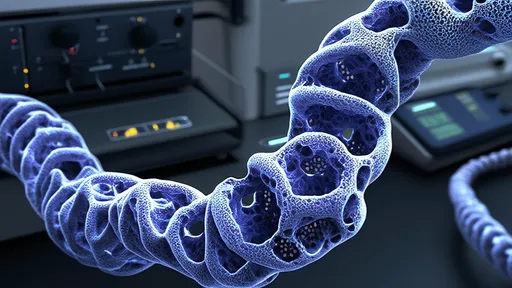
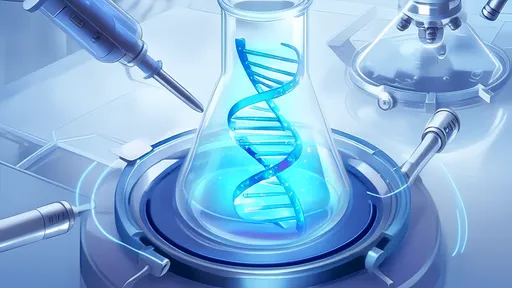
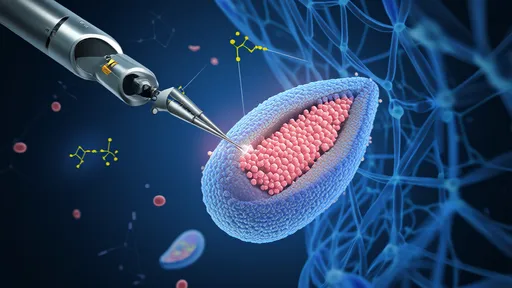
In a groundbreaking leap for regenerative medicine, scientists are pioneering mitochondrial transplantation therapy—a revolutionary approach that could repair damaged cells at their energetic core. Dubbed "nano-surgery for the cellular power plants," this technique involves extracting healthy mitochondria from donor cells and delivering them into compromised tissues, offering hope for conditions ranging from neurodegenerative diseases to heart failure. The implications are profound: by restoring the body’s ability to produce energy, researchers aim to reverse cellular decay and unlock new frontiers in treating age-related and genetic disorders.

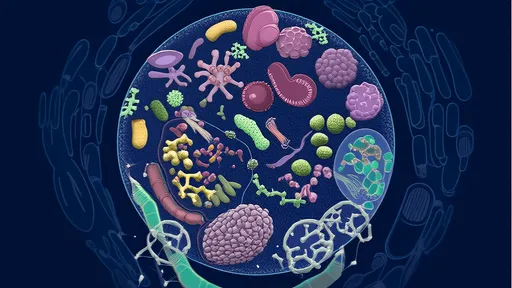
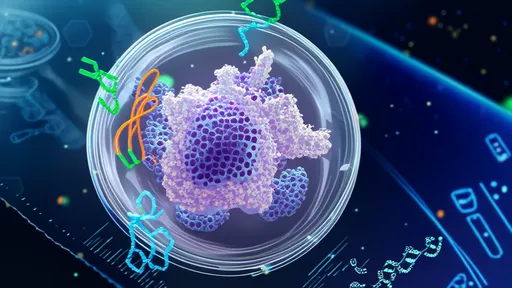
The concept hinges on mitochondria’s role as the cell’s powerhouse. These tiny organelles generate adenosine triphosphate (ATP), the currency of cellular energy. When mitochondria malfunction due to mutations, oxidative stress, or aging, cells starve, leading to organ dysfunction. Traditional therapies often address symptoms rather than the root cause. Mitochondrial transplantation, however, targets the defect directly. Early experiments show transplanted mitochondria integrating into host cells, replenishing ATP production, and even improving survival rates in critical cases like ischemic heart tissue.

How does this microscopic feat work? The process begins with isolating viable mitochondria from healthy tissue—often a patient’s own or from matched donors. Using advanced techniques like centrifugation or microfluidics, researchers purify these organelles before injecting them into target areas. Some methods employ nanoparticles or viral vectors as delivery vehicles, ensuring precise placement. Once inside recipient cells, the new mitochondria fuse with existing networks, sharing genetic material and restoring metabolic function. Animal studies demonstrate reduced inflammation and improved tissue repair, sparking optimism for human trials.

One of the most promising applications lies in neurology. Neurodegenerative diseases like Parkinson’s and Alzheimer’s are marked by mitochondrial dysfunction in neurons. In lab models, transplanted mitochondria have been shown to migrate along neural pathways, rescuing dying cells and improving cognitive function. Cardiologists are equally intrigued: after heart attacks, mitochondrial grafts could rejuvenate oxygen-deprived myocardium, preventing scar formation. Even rare genetic disorders like Leigh syndrome, where mutated mitochondrial DNA cripples energy production, might one day be treated with this approach.

Despite its potential, the therapy faces hurdles. Ensuring mitochondrial compatibility is critical—mismatches could trigger immune rejection or metabolic chaos. Researchers are exploring autologous transplants (using a patient’s own mitochondria) or creating universal donor lines with edited DNA. Another challenge is scaling up delivery; while localized injections work for some organs, systemic distribution requires innovative carriers that evade the immune system. Ethical questions also arise, particularly regarding germline editing if mitochondrial DNA alterations are heritable.

The field is advancing rapidly. In 2023, a Boston-based team reported restoring vision in optic nerve damage models using mitochondrial transfers. Meanwhile, Japanese scientists developed a "mitochondrial drug" encapsulating organelles in biodegradable polymers for sustained release. Startups are commercializing related technologies, though regulatory approval remains years away. Critics urge caution, noting that long-term effects are unknown—could transplanted mitochondria introduce unintended mutations or disrupt cellular signaling? Rigorous clinical trials will be essential.

Beyond disease treatment, mitochondrial therapy hints at broader possibilities. Athletes might seek enhanced endurance through boosted cellular energy. Anti-aging clinics could market "mitochondrial rejuvenation" to counteract senescence. Such prospects raise ethical dilemmas about enhancement versus therapy. Yet for patients with untreatable conditions, this science represents more than hope—it’s a paradigm shift. As one researcher phrased it: "We’re not just treating symptoms anymore. We’re rebuilding the very engines of life."

The coming decade will determine whether mitochondrial transplantation transitions from lab curiosity to mainstream medicine. With billions of cells awaiting their power plant upgrades, this nanoscale surgery may well redefine what’s possible in healing the human body. For now, each successful experiment brings us closer to answering a fundamental question: If we can repair the batteries of our cells, might we finally conquer diseases once deemed incurable?
Recommend Posts
Science

Inverse Design of Materials: AI-Generated Virtual Screening for Superconductors

By /Jul 18, 2025

The discovery of new superconducting materials has long been a painstaking process, requiring years of experimental trial and error. But in a groundbreaking shift, researchers are now leveraging artificial intelligence to accelerate this search—virtually screening millions of potential compounds before a single lab test is conducted. This AI-driven approach is not just speeding up discoveries; it’s redefining how we explore the frontiers of material science.
Science

Neural Network Understanding Gravity and Friction

By /Jul 18, 2025

In the rapidly evolving field of artificial intelligence, researchers are increasingly turning to the principles of classical physics to inspire new neural network architectures. One particularly fascinating area of exploration involves modeling AI systems after the fundamental forces of gravity and friction. These concepts, which govern much of our physical world, are now being adapted to create more efficient and intuitive machine learning models.
Science

Ice Template Ceramics: Efficient Thermal Insulators with Biomimetic Porous Structures

By /Jul 18, 2025

In the quest for advanced thermal insulation materials, scientists have turned to nature for inspiration, leading to the development of ice-templated ceramics. These innovative materials mimic the intricate porous structures found in biological systems, offering unparalleled efficiency in heat resistance. The unique architecture of ice-templated ceramics not only provides exceptional thermal insulation but also maintains structural integrity under extreme conditions, making them a promising solution for industries ranging from aerospace to construction.
Science

Gut Microbiome Radar: Early Cancer Warning from Fecal Microbiota

By /Jul 18, 2025

The human gut microbiome, a complex ecosystem of trillions of microorganisms, has long been recognized for its role in digestion, immunity, and overall health. Recent breakthroughs in microbiome research, however, are revealing an even more profound connection—this invisible universe within us may hold the key to early cancer detection. Scientists are now exploring how shifts in fecal microbial composition could serve as a biological radar, signaling the presence of malignancies long before traditional diagnostics catch them.
Science

Biological Photovoltaic Systems: Blue Algae Coated Building Power Generation Curtain Walls

By /Jul 18, 2025

The intersection of biology and renewable energy has taken a bold leap forward with the emergence of bio-photovoltaic systems, particularly those leveraging cyanobacteria-coated building facades. These living solar panels, often referred to as "biogenic solar walls," represent a radical departure from traditional silicon-based photovoltaics. By harnessing photosynthesis in engineered cyanobacteria layers, architects and energy scientists are reimagining urban landscapes as dynamic power generators.
Science

Transmutation of Nuclear Waste: Accelerator-Driven Element Transformation

By /Jul 18, 2025

The concept of transmuting nuclear waste using accelerator-driven systems (ADS) has long been a topic of both fascination and controversy in the realm of nuclear science. Unlike conventional reactors, which primarily generate energy through fission chain reactions, ADS employs a particle accelerator to produce high-energy protons that, in turn, trigger spallation reactions in a heavy metal target. The resulting neutrons are then harnessed to transmute long-lived radioactive isotopes into shorter-lived or even stable elements. This approach offers a tantalizing solution to one of nuclear energy's most persistent challenges: the disposal of high-level radioactive waste.
Science

Scientific Literature Engine: An Intelligent Assistant for Automatically Building Knowledge Graphs

By /Jul 18, 2025

In the rapidly evolving landscape of academic research, a new generation of scientific literature engines is transforming how scholars interact with knowledge. These intelligent systems are moving beyond simple search functionalities to automatically construct dynamic knowledge graphs that reveal hidden connections across disciplines. The implications for researchers, institutions, and the broader scientific community are profound as these tools begin to reshape the very fabric of scholarly communication.
Science

Geothermal Battery Technology: Energy Storage Systems Using Abandoned Oil Wells

By /Jul 18, 2025

As the world transitions toward renewable energy, the challenge of storing excess power remains a critical hurdle. One innovative solution gaining traction is the concept of geothermal batteries—a system that leverages abandoned oil wells to store energy underground. This approach not only addresses the growing need for large-scale energy storage but also gives a second life to decommissioned fossil fuel infrastructure.
Science

Federated Learning Network: Private Collaborative Medical Modeling Across Institutions

By /Jul 18, 2025

The healthcare industry stands at the precipice of a data revolution, where artificial intelligence promises to transform diagnostics, treatment planning, and patient outcomes. Yet this potential remains largely untapped due to one persistent barrier: patient privacy. Traditional approaches to developing medical AI require centralizing sensitive health data, creating unacceptable risks and regulatory challenges. Now, an emerging paradigm called federated learning is rewriting the rules of medical AI collaboration while keeping data safely behind institutional firewalls.
Science

Liquid Metal Ink: Re-writable Flexible Circuit Printing Technology

By /Jul 18, 2025

The world of electronics manufacturing is undergoing a quiet revolution as researchers develop innovative methods to create flexible, rewritable circuits using liquid metal inks. This groundbreaking technology promises to transform how we design and produce electronic devices, offering unprecedented flexibility and sustainability in circuit fabrication.
Science

A Robotic Scientist: An Experimental Platform for Autonomous Protein Design

By /Jul 18, 2025

The field of robotics has taken a revolutionary leap forward with the emergence of autonomous platforms capable of designing proteins. These robotic scientists, powered by advanced artificial intelligence and machine learning algorithms, are reshaping the landscape of biochemical research. By combining computational design with automated laboratory workflows, these systems promise to accelerate discoveries in medicine, materials science, and biotechnology at an unprecedented pace.
Science

Resetting the Aging Clock: Safe Boundaries of Partial Reprogramming Techniques

By /Jul 18, 2025

The field of aging research has witnessed a groundbreaking development with the emergence of partial reprogramming techniques, which promise to reset the biological clock of cells without erasing their identity. This revolutionary approach has sparked both excitement and caution within the scientific community, as researchers grapple with defining the safety boundaries of such interventions. The delicate balance between rejuvenation and potential risks remains a central focus as we explore the frontiers of longevity science.
Science

Self-Healing Elastomers: Smart Healing Technology for Automotive Tires

By /Jul 18, 2025

The automotive industry stands on the brink of a revolution, one that promises to transform the humble tire into a self-healing marvel of modern engineering. Self-repairing elastomers, a class of smart materials capable of autonomously recovering from damage, are poised to redefine the safety, durability, and sustainability of tires. This breakthrough could render punctures and wear a relic of the past, ushering in an era where tires maintain their integrity with minimal human intervention.
Science

Ocean Thermal Energy Conversion: A Clean Energy Solution for Tropical Islands

By /Jul 18, 2025

The vast oceans covering our planet hold immense potential for renewable energy, and one of the most promising yet underutilized technologies is Ocean Thermal Energy Conversion (OTEC). For tropical islands blessed with warm surface waters and deep cold currents, OTEC offers a clean, reliable, and sustainable energy solution that could reduce dependence on imported fossil fuels while combating climate change.
Science

Carbon Nanotube Muscles: Actuators Stronger Than Natural Muscles by a Factor of Ten

By /Jul 18, 2025

In the realm of advanced materials and biomechanical engineering, a groundbreaking innovation has emerged that could redefine the future of robotics, prosthetics, and even human augmentation. Researchers have developed artificial muscles made from carbon nanotubes that outperform natural muscles by a staggering factor of ten. This leap in actuator technology promises to revolutionize industries where strength, flexibility, and efficiency are paramount.
Science

Sonogenic Gene Switch: Ultrasound-Activated Precision Therapy Technology

By /Jul 18, 2025

The field of precision medicine has taken a revolutionary leap forward with the development of ultrasound-activated gene switches, a groundbreaking technology that promises to transform therapeutic interventions. Unlike traditional methods that rely on systemic drug delivery or invasive procedures, this innovative approach harnesses the power of ultrasound to control gene expression with unparalleled spatial and temporal precision. The implications for treating complex diseases—from cancer to neurological disorders—are profound, offering hope for targeted therapies with minimal side effects.
Science

High-Altitude Wind Energy Kites: Tethered Capture of Stratospheric Wind Power

By /Jul 18, 2025

The quest for renewable energy has taken a bold leap into the skies, quite literally, with the emergence of high-altitude wind power systems. Among the most intriguing innovations in this space is the concept of tethered airborne wind energy (AWE) systems, colloquially known as "wind kites." These devices aim to harness the powerful and consistent winds found in the stratosphere, a layer of the atmosphere that has remained largely untapped by traditional wind turbines. Unlike conventional wind farms, which are limited by land use and lower-altitude wind variability, stratospheric wind kites promise a revolutionary approach to generating clean energy.
Science

Mitochondrial Transplant Therapy: Nanosurgery to Repair the Cellular Powerhouse

By /Jul 18, 2025

In a groundbreaking leap for regenerative medicine, scientists are pioneering mitochondrial transplantation therapy—a revolutionary approach that could repair damaged cells at their energetic core. Dubbed "nano-surgery for the cellular power plants," this technique involves extracting healthy mitochondria from donor cells and delivering them into compromised tissues, offering hope for conditions ranging from neurodegenerative diseases to heart failure. The implications are profound: by restoring the body’s ability to produce energy, researchers aim to reverse cellular decay and unlock new frontiers in treating age-related and genetic disorders.
Science

Transparent Aluminum Armor: The Military-to-Civilian Transition of Nanocrystalline Aluminum Oxide

By /Jul 18, 2025

The development of transparent aluminum armor represents a groundbreaking fusion of advanced materials science and practical applications across military and civilian sectors. This remarkable innovation, rooted in the manipulation of alumina nanoparticles, has evolved from laboratory curiosity to real-world solutions that redefine conventional notions of protective materials.
Science

Vagus Nerve Decoding: Electronic Pills for Autoimmune Diseases

By /Jul 18, 2025

The human body's immune system is a marvel of biological engineering, capable of defending against countless pathogens. Yet sometimes, this intricate defense mechanism turns against itself, leading to autoimmune diseases like rheumatoid arthritis, Crohn's disease, or lupus. Traditional treatments often involve suppressing the entire immune system, leaving patients vulnerable to infections. Now, a groundbreaking approach merging neuroscience and immunology – vagus nerve decoding through electronic pills – promises to revolutionize autoimmune therapy.