The field of precision medicine has taken a revolutionary leap forward with the development of ultrasound-activated gene switches, a groundbreaking technology that promises to transform therapeutic interventions. Unlike traditional methods that rely on systemic drug delivery or invasive procedures, this innovative approach harnesses the power of ultrasound to control gene expression with unparalleled spatial and temporal precision. The implications for treating complex diseases—from cancer to neurological disorders—are profound, offering hope for targeted therapies with minimal side effects.
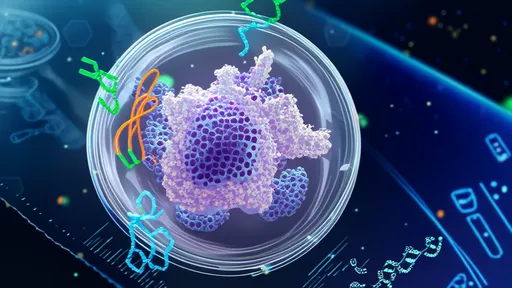
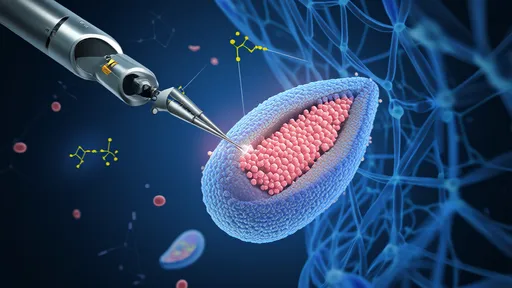
At the heart of this technology lies the fusion of synthetic biology and acoustic engineering. Researchers have engineered genetic circuits that respond to specific ultrasound frequencies, effectively creating a "remote control" for genes. These circuits are typically embedded into mammalian cells using viral vectors or other delivery mechanisms. When exposed to focused ultrasound waves, the mechanical energy triggers conformational changes in specially designed proteins, activating or suppressing downstream gene expression. This level of control allows clinicians to target tissues deep within the body non-invasively, a feat previously unattainable with light-based optogenetic tools.
The therapeutic potential of ultrasound-activated gene switches is already being explored in preclinical models. In oncology, for instance, researchers have demonstrated the ability to selectively activate immune-stimulating genes within tumors while sparing healthy tissue. This localized immune activation could dramatically enhance the efficacy of cancer immunotherapies while reducing systemic toxicity. Similarly, in diabetes research, scientists have used ultrasonic pulses to precisely regulate insulin production in engineered pancreatic cells, offering a potential alternative to daily insulin injections.
What sets this technology apart is its unique combination of depth penetration and precision. Ultrasound waves can travel several centimeters into biological tissue without significant attenuation, unlike light which scatters rapidly. Moreover, modern high-intensity focused ultrasound (HIFU) systems can concentrate energy on areas as small as a cubic millimeter, enabling gene modulation with anatomical specificity. This spatial control is complemented by temporal precision—genes can be switched on or off within minutes of ultrasound application, allowing for dynamic adjustment of therapeutic effects.
Safety considerations remain paramount as the technology advances toward clinical translation. While ultrasound is generally regarded as safe at diagnostic intensities, the higher energies required for genetic switching necessitate thorough investigation. Current research focuses on optimizing the acoustic parameters to minimize potential tissue heating or mechanical damage. Additionally, the long-term stability of genetically modified cells and their potential immune recognition are active areas of study. Early results suggest that intermittent ultrasound exposure doesn't provoke significant immune responses, but comprehensive toxicology studies are ongoing.
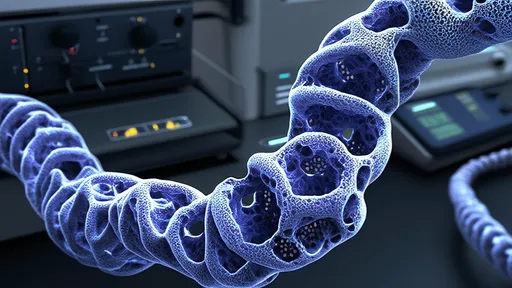
The engineering challenges behind ultrasound-responsive genetic systems are equally fascinating. Designing proteins that reliably respond to mechanical stimuli required creative solutions from structural biology. One successful approach involves embedding gas-filled protein nanostructures called "gas vesicles" within cells—these amplify the ultrasound signal by vibrating in response to sound waves, subsequently activating adjacent mechanosensitive ion channels. Other systems utilize piezoelectric materials or temperature-sensitive promoters triggered by mild ultrasound-induced heating. Each design presents unique advantages for different therapeutic contexts.
Beyond therapeutic applications, this technology opens new frontiers in basic research. Neuroscientists are particularly excited about the prospect of mapping neural circuits with ultrasonic precision, as it allows genetic manipulation of specific brain regions in awake, behaving animals. This could lead to breakthroughs in understanding depression, Parkinson's disease, and other neurological conditions. The ability to control gene expression patterns in developing embryos with spatial and temporal precision also offers powerful tools for developmental biology research.
Commercialization efforts are already underway, with several biotechnology startups racing to bring ultrasound-controlled therapies to market. Regulatory pathways present unique challenges, as these products combine elements of gene therapy, medical devices, and pharmaceutical compounds. The FDA has begun establishing frameworks to evaluate such convergent technologies, recognizing their potential to address unmet medical needs. Industry analysts predict the first clinical trials for ultrasound-activated gene therapies could begin within the next three to five years, initially focusing on localized conditions like solid tumors or joint disorders.
The integration of artificial intelligence with ultrasound gene control systems represents another exciting direction. Machine learning algorithms are being developed to optimize ultrasound parameters in real-time based on biological feedback, creating closed-loop therapeutic systems. For example, an AI controller could adjust ultrasonic stimulation intensity and duration based on continuous glucose monitoring in diabetic patients, maintaining optimal insulin production automatically. Such smart systems could dramatically improve treatment consistency and patient outcomes.
Ethical considerations accompany these technological advancements. The ability to remotely control human gene expression raises questions about potential misuse, necessitating robust governance frameworks. However, the scientific community emphasizes that current systems require prior genetic modification of cells—they cannot alter the DNA of native tissues. This inherent limitation provides a natural safeguard against unauthorized use while preserving legitimate therapeutic applications.
Looking ahead, the convergence of ultrasound genetics with other emerging technologies could unlock even greater possibilities. Combining CRISPR-based gene editing with ultrasonic control could enable precise in vivo genome modifications at specific anatomical sites. Similarly, integrating ultrasound switches with tissue engineering approaches may lead to "smart" implants that dynamically respond to physiological needs. As research progresses, what began as a clever laboratory technique may well evolve into a cornerstone of 21st-century medicine.
The development of ultrasound-activated gene switches exemplifies how interdisciplinary collaboration can yield transformative medical solutions. By bridging acoustics, genetics, and bioengineering, researchers have created a platform technology with applications spanning from fundamental science to clinical therapy. While challenges remain in translating these systems to human use, the pace of innovation suggests that ultrasonic precision medicine may soon transition from laboratory curiosity to medical reality, offering new hope for patients with conditions that currently defy treatment.

By /Jul 18, 2025

By /Jul 18, 2025

By /Jul 18, 2025

By /Jul 18, 2025

By /Jul 18, 2025

By /Jul 18, 2025

By /Jul 18, 2025

By /Jul 18, 2025

By /Jul 18, 2025

By /Jul 18, 2025

By /Jul 18, 2025
By /Jul 18, 2025

By /Jul 18, 2025

By /Jul 18, 2025
By /Jul 18, 2025

By /Jul 18, 2025

By /Jul 18, 2025
By /Jul 18, 2025
By /Jul 18, 2025

By /Jul 18, 2025